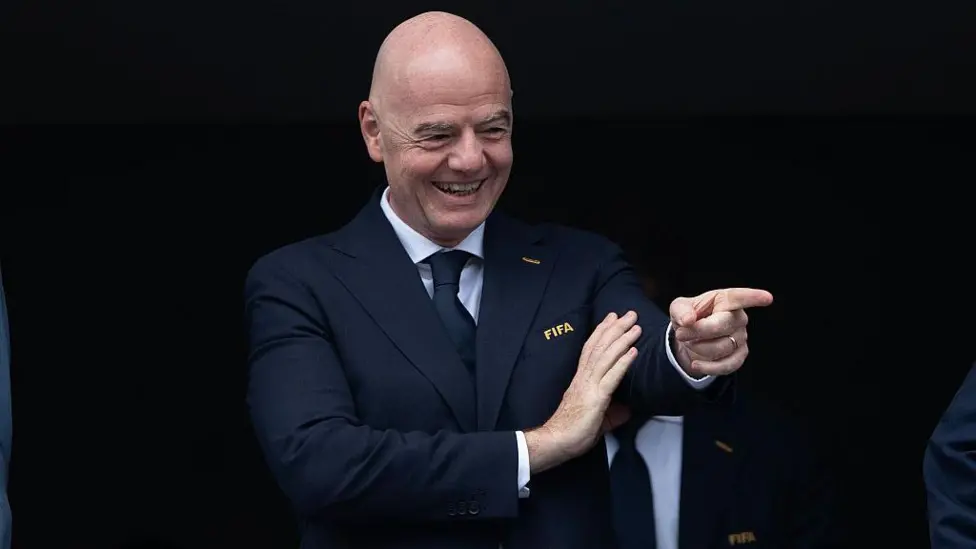
The 2026 FIFA World Cup was supposed to be a historic celebration of football expanding across North America. Instead, the tournament has been plunged into a deep governance crisis following an unprecedented administrative decision that has threatened to sever the relationship between FIFA and European football's governing body, UEFA. At the heart of this storm is USMNT striker Folarin Balogun, a direct phone call from the White House, and a suspended ban that many claim has shattered the independent judicial principles of international sports law.
The scandal represents the most significant challenge to Gianni Infantino’s presidency since he assumed office in 2016. What began as a standard disciplinary decision on the pitch has escalated into a high-stakes geopolitical battle, raising serious questions about whether external political pressure can now dictate the rules of the world’s biggest sporting event.
The Incident: A Moment of Madness in Dallas
The controversy traces its origins back to the final Group B fixture between the United States and Bosnia and Herzegovina. With the USMNT fighting for survival, striker Folarin Balogun was shown a straight red card following a high, reckless challenge in the 74th minute. Under normal circumstances, standard FIFA tournament regulations dictate that a straight red card results in an automatic one-match suspension. This would have ruled the Monaco forward out of the USMNT's highly anticipated Round of 16 clash against Belgium in Seattle.
For the host nation, losing their starting talisman was a catastrophic blow. For the sporting authorities, however, it was a routine disciplinary procedure. But within hours of the final whistle, the gears of political lobbying began to spin behind closed doors.
The Phone Call: Political Interference or Request for Justice?
The situation escalated into a full-scale political event when U.S. President Donald Trump publicly confirmed that he had personally called FIFA President Gianni Infantino to complain about the red card. Trump argued that the referee’s performance was "suspect" and described the dismissal of the American striker as a flagrant "injustice." While Trump insisted he did not put undue pressure on Infantino, the optics of a host nation's president lobbying the FIFA chief over a sporting sanction sent shockwaves through the footballing community.
FIFA’s judicial bodies are strictly required to operate independently, free from governmental or executive influence. The chronological timeline of the subsequent decision raised immediate red flags among European associations:
- July 4, 2026: Folarin Balogun is shown a straight red card in the USMNT's final group stage match.
- July 5, 2026: U.S. President Donald Trump contacts Gianni Infantino to request an immediate review of the card.
- July 6, 2026 (09:00 UTC): UEFA and the Royal Belgian Football Association (RBFA) warn FIFA against political intervention.
- July 6, 2026 (18:00 UTC): The FIFA Disciplinary Committee announces that Balogun's one-match ban is suspended for a probationary period of one year, clearing him to face Belgium.
- July 7, 2026: Folarin Balogun starts for the USA in their Round of 16 match against Belgium.
A Dangerous Precedent: The Suspended Ban
The decision by the FIFA Disciplinary Committee to suspend the ban was described by legal experts as historically unprecedented. The committee argued that the dismissal was a "manifest error" and that a probationary suspension was the most equitable outcome. However, the ruling drew immediate and fierce condemnation from Europe.
UEFA declared that a "red line had been crossed," warning that the independence of FIFA’s judicial organs had been completely compromised. The Royal Belgian Football Association (RBFA) released a stinging statement, calling the decision "incomprehensible" and a direct breach of the competition's sporting regulations. The sentiment was echoed across European leagues, with critics accusing FIFA of favoring the host nation to maintain local TV ratings and commercial interest in the tournament.
"This is a dark day for the integrity of international football. If political leaders can lobby the FIFA presidency to overturn red cards, the sporting merit of the entire World Cup is called into question. We have crossed a line from which there may be no return."
Balogun’s Performance: Was the Controversy Worth It?
Despite the administrative maneuvering to clear his name, the decision did not save the United States on the pitch. The USMNT was thoroughly outclassed by a clinical Belgian side, falling to a heavy 4-1 defeat in Seattle and exiting the tournament. Balogun’s presence on the pitch did little to alter the tactical reality of the match. Below are the key statistical facts from the controversial match:
- Final Score: Belgium 4-1 USA (USMNT eliminated)
- Balogun's Playing Time: 90 minutes (started and played the full match)
- Balogun's Performance: 34 touches, 1 shot on target, 2 key passes, 0 goals
- Team Possession: USA 56% vs. Belgium 44%
- Big Chances Created: USA 0 vs. Belgium 5
Tactical analysts noted that the intense media storm surrounding Balogun’s late inclusion may have disrupted the USMNT's preparation. While the players tried to focus on the game, the cloud of controversy was impossible to ignore.
Infantino’s Future: A Crisis of Governance
Gianni Infantino has defended the decision, reiterating that FIFA’s judicial bodies operate autonomously and that he did not influence the Disciplinary Committee. He confirmed he received a call from President Trump but claimed he simply explained the ongoing legal review process. However, European FA representatives are reportedly unconvinced, with several prominent board members calling for an ethics investigation into the communication between the FIFA president and the White House.
With the European governing body UEFA threatening a formal complaint and potentially even legal action, the Balogun scandal could represent the beginning of the end for Infantino's tenure. Whether his administration can survive the pressure from a united European front remains to be seen, but the integrity of FIFA's governance has once again been placed under the global microscope.
Sponsored
[ Google AdSense — In-Article Native Ad ]
Frequently Asked Questions: Understanding the Balogun Controversy
To clarify the details surrounding this developing story, here are the answers to the most common questions regarding the FIFA-Balogun controversy:
- Has a FIFA World Cup red card ban ever been suspended before?
- No. Standard FIFA disciplinary guidelines mandate an automatic, non-appealable one-match ban for a straight red card. Suspending this ban for a probationary year is an unprecedented deviation from established tournament regulations.
- What was the official justification for clearing Balogun to play?
- The FIFA Disciplinary Committee claimed that upon review, the challenge did not meet the threshold for violent conduct or serious foul play, citing it as a "manifest error" by the referee and opting to suspend the automatic ban.
- Could Gianni Infantino face removal from office over the call?
- While Infantino enjoys strong support from member associations in CONCACAF, Africa, and Asia, a formal ethics investigation triggered by UEFA could seriously damage his credibility, potentially leading to a vote of no confidence or a leadership challenge at the next FIFA Congress.