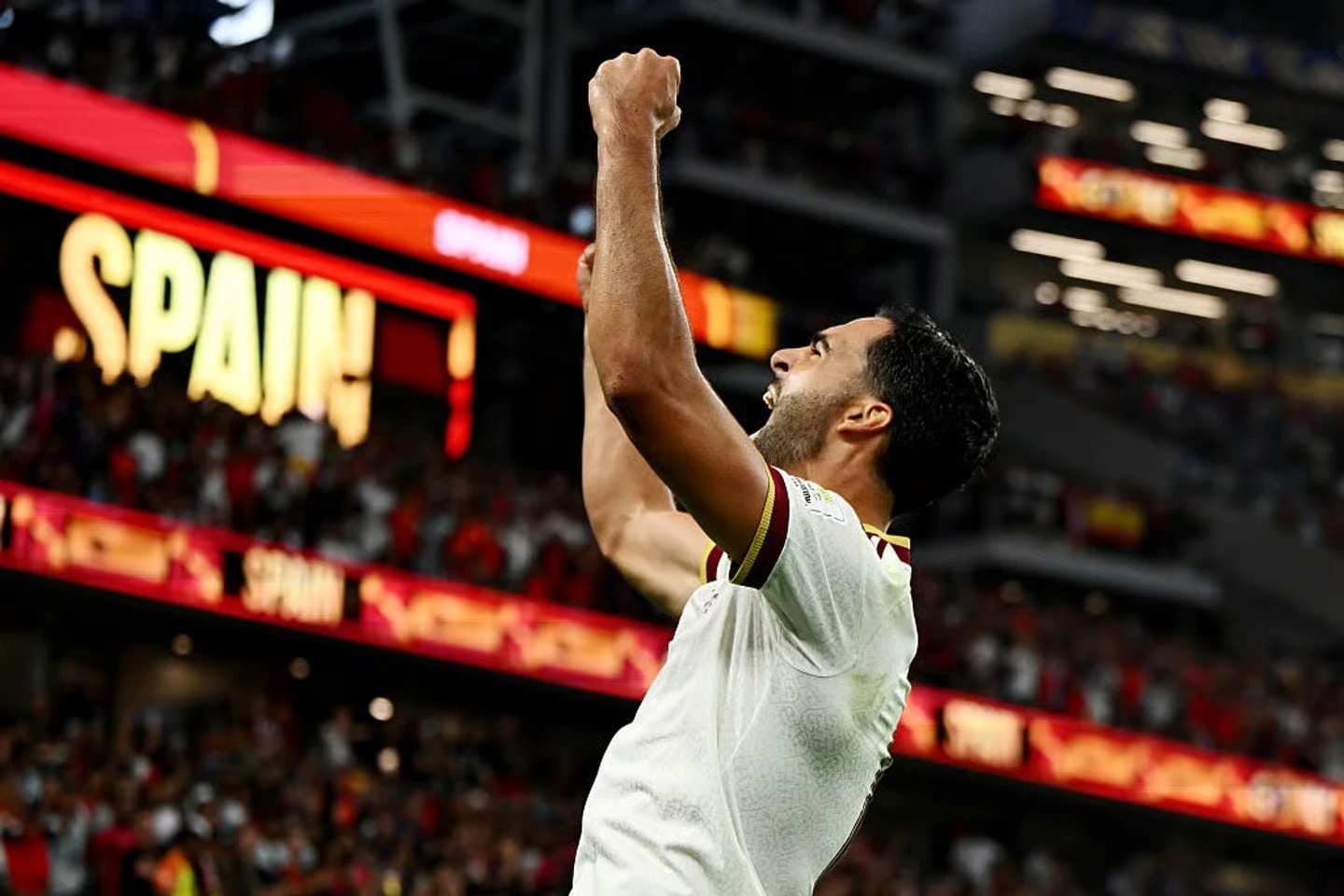
In international football, the difference between tactical genius and heartbreak is measured in seconds and millimeters. For ninety minutes of a sweltering night in Dallas, Spain and Portugal engaged in a grueling chess match. While Portugal stood firm, absorbing pressure and relying on their disciplined defensive shape, Spain kept passing. They waited, circulated, and probed, believing that one mental lapse would eventually undo their rivals. In the 91st minute, that lapse arrived, and Mikel Merino made sure it was fatal.
How the Match Unfolded
The encounter started exactly as many tactical analysts predicted: Spain dominated the ball, while Roberto Martínez's Portugal set up in a low-to-mid block, denying space in the central corridors. The first half was a masterclass in positional discipline. Whenever Spain tried to find Lamine Yamal or Nico Williams in isolated situations, Portugal's fullbacks were backed by quick lateral cover. Cristiano Ronaldo was left isolated up front, acts as a nominal outlet but struggling to receive clean supply against Aymeric Laporte and Robin Le Normand.
As the second half progressed, the temperature took its toll. Spain, led by the immaculate Rodri, refused to force vertical passes. They chose instead to move Portugal's block from side to side, systematically draining the energy reserves of the Portuguese midfielders. By the time the game entered stoppage time, Portugal's defensive lines had dropped three yards deeper, leaving a vacuum in the zone just outside the penalty box. Spain exploited it, delivering the definitive counter-press that unlocked the win.
Why Spain Deserved It, in Plain Numbers
While some pundits might call a 91st-minute winner lucky, the underlying data paints a very clear picture of Spanish superiority. Here is how the match looked from a statistical perspective:
- The Expected Goals (xG) Gap: Spain accumulated an xG of 1.84 compared to Portugal's 0.72. The volume and quality of chances leaned heavily toward La Roja.
- Rodri's Control: The midfield metronome completed 106 of 112 attempted passes (94.6% accuracy), single-handedly neutralizing Portugal's pressing triggers.
- Unai Simon's Historic Run: With another solid performance and key saves, Simon reached 609 minutes without conceding a goal in major tournament football, setting a new national record.
- Possession Dominance: Spain commanded 64% of the ball, forcing Portugal's defensive players to run a combined 12 kilometers more than their counterparts.
The Late Goal Was Not Luck
Mikel Merino's winning goal was the logical conclusion of a tactical concept known as "rest defense." When Portugal attempted to transition out of their box in the 91st minute after a cleared cross, they found themselves completely surrounded. Spain's counter-press, spearheaded by Pedri and Dani Olmo, won the ball back within four seconds.
With Portugal's defensive line in the process of stepping up, Merino spotted the vulnerability. He timed his run perfectly from deep, bursting into the space behind Ruben Dias. The cross from the right flank was precise, and Merino's glancing header left the goalkeeper with absolutely no chance. It was not a lucky bounce; it was a calculated exploitation of structural collapse brought on by ninety minutes of relentless lateral shifting.
What This Means for the Tournament
With this victory, Spain secures their spot in the semi-finals, establishing themselves as the undisputed team to beat. Their ability to remain patient under pressure and adapt their tempo shows a maturity that was missing in previous tournaments.
For Portugal, the elimination marks the end of an era. With Cristiano Ronaldo cut off as a passenger for most of the game, questions will inevitably arise about the tactical sustainability of building a high-intensity system around an aging superstar. The autopsy of this defeat will likely trigger a transition towards a younger, more dynamic attacking front.
How to Read Tonight's Football News Avalanche
In the wake of a massive fixture, the media narrative is usually dominated by hyperbole. Some will call it a total Portuguese collapse; others will write off Spain's win as a fortunate late strike. As fans, reading the news avalanche requires looking past the emotion of the 91st-minute scoreline. The tactical reality is that Spain earned their victory through systematic suffocation. The stats don't lie: when you starve a team of the ball for over an hour, mistakes are guaranteed to happen in the dying minutes.
One Thing to Try Next Match
When you watch the next match, focus your attention on the defensive midfielder during the transition phase. Instead of tracking the ball, watch how players like Rodri position themselves relative to the opponent's outlets when their team is attacking. This "rest defense" positioning is what prevents counter-attacks and allows dominant teams to sustain pressure until the opponent finally breaks.