
Fact Check Summary
- Attendance Claim: Infantino claims 7 million attendees; official FIFA figures show 6,810,966 across 104 matches, leaving an unexplained 189,000 deficit.
- Security Claim: Letter claims "zero incidents, zero hostility, zero violence"; five days prior, FIFA appointed a Disciplinary & Ethics Prosecutor over altercations at the Spain vs Argentina final.
- Visa Denial Reality: Somali referee Omar Artan was denied entry in Miami by DHS over vetting concerns; UEFA subsequently assigned him to the Super Cup on 12 August.
- Disciplinary Overreach: Folarin Balogun's red card ban was suspended under Article 27 following a call from Donald Trump, drawing fierce criticism from the Belgian FA and UEFA.
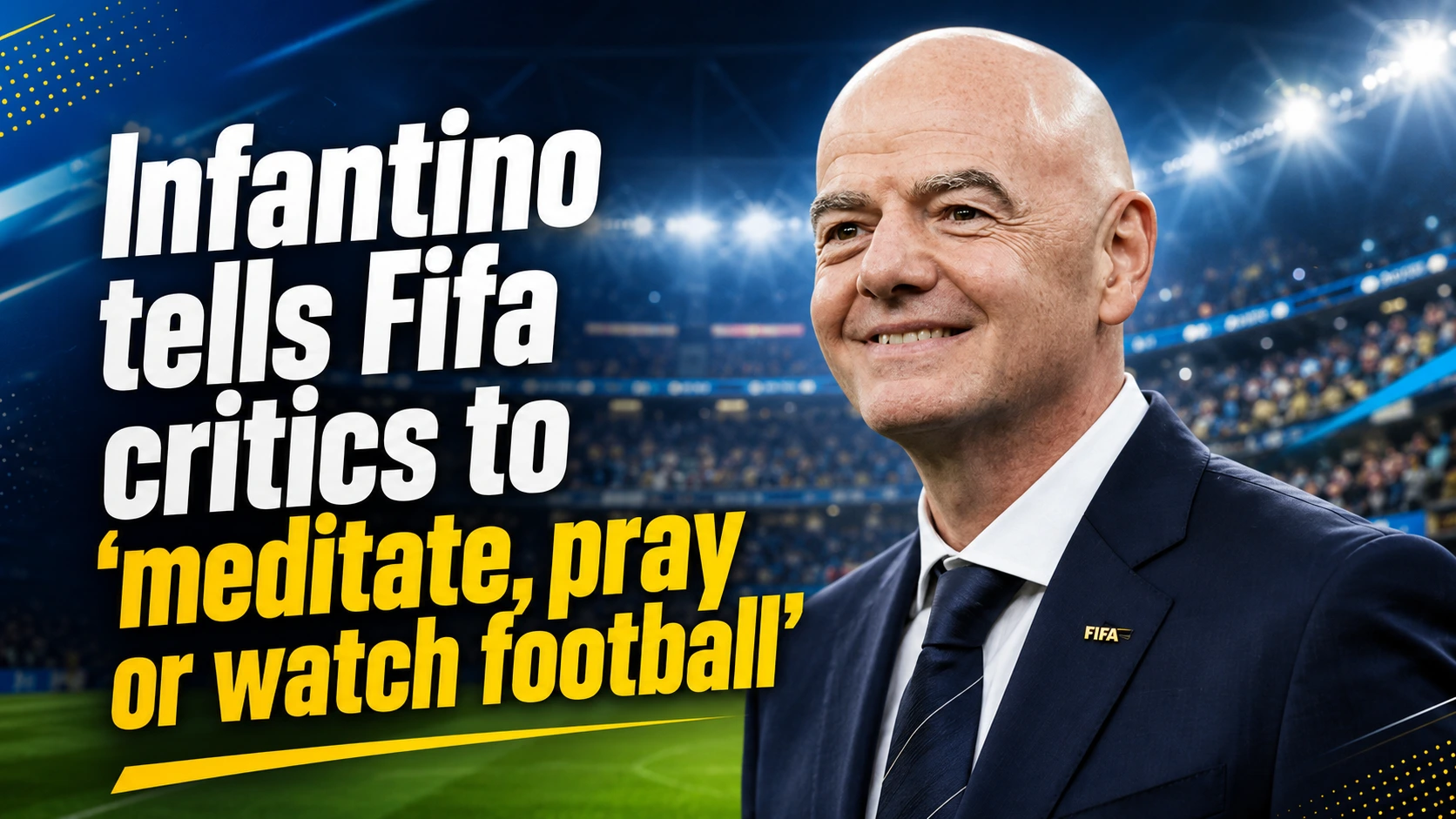
On Sunday evening, timestamped precisely at 19:00 on Sunday 26 July 2026, FIFA published something entirely surreal onto inside.fifa.com. It wasn't an audited financial breakdown or an objective tournament report. It was an 890-word open letter from president Gianni Infantino directly addressing his critics, cross-posted across 15 glossy Instagram slides to millions of followers.
Instead of answering legitimate logistical and governance concerns, the piece reads like an authoritative sermon. The standout line invites his sceptics to pause, self-reflect, and literally "meditate, pray, or watch a football match".
Preach all you like, Gianni. But when you match his buoyant narrative against FIFA's actual published numbers and internal legal dockets, the PR veneer falls apart immediately.
The Seven Million Myth: Missing Crowds and the 1994 Benchmark
Let's begin with the turnstile spin. Infantino's letter confidently asserts that seven million people packed into stadiums across 16 host cities. It sounds impressive in a corporate press release. Yet there is a glaring technical hurdle: FIFA's own published official figure stands at exactly 6,810,966 attendees across all 104 matches, operating at 99.7% capacity.
That leaves an awkward gap of roughly 189,000 attendees—effectively two full Wembley sell-outs missing from the ledger.
While the 2026 tournament comfortably defeated the aggregate attendance totals of past iterations, simply adding dozens of extra group matches makes cumulative numbers a cheap metric. Look at the true measure of stadium attraction: average match attendance. The tournament held in 1994 still holds the record for average attendance, reaching an astonishing 68,991 per game compared to 65,490 this summer. No amount of meditative breathing alters basic division.
"Zero Incidents" vs. The MetLife Tunnel Brawl
The letter then pivots to security, claiming categorically that there were "zero incidents, zero hostility, zero violence" and a 100% safety record inside stadium perimeters.
This amounts to an extraordinary rewriting of recent history. Roughly five days before Infantino pushed publish on this letter, FIFA's Disciplinary Committee officially appointed a Disciplinary and Ethics Prosecutor under Article 36 of the governing code.
The assignment? To investigate fierce post-match altercations following the dramatic Spain 1-0 Argentina final at MetLife Stadium, where a crowd of 80,663 attendance watched emotional touchline tempers boil over into chaos. You cannot proclaim an immaculate record of zero hostility while your own legal prosecutors are actively amassing testimony regarding physical altercations at the showpiece final.
Sponsored
[ Google AdSense — In-Article Native Ad ]
Visa Chaos, Miami Blockades, and Relocated Bases
When defending logistical and administrative failures, Infantino insists that critics have unfairly fixated on "a few" denied visas. Try selling that narrative to Somali referee Omar Artan.
Artan was not a peripheral figure. He was voted CAF Referee of the Year 2025 and was formally selected among FIFA's prestigious elite squad of 52 World Cup officials. Yet upon landing in Miami, he was deemed inadmissible by the Department of Homeland Security (DHS) due to vaguely defined vetting concerns—despite holding a valid, approved visa.
Remember Infantino's dismissive advice back in June? He publicly told federations and supporters to simply "chill and relax" regarding administrative delays.
Artan was not afforded the chance to relax; he was effectively deported at the customs gate. His professional reputation remains completely spotless in European football, proven when UEFA subsequently assigned Artan to referee the headline Super Cup fixture on 12 August.
Furthermore, logistical friction disrupted team camps. During the group stage, Iran were forced into an emergency relocation of their primary training base, uprooting operations from Tucson all the way across the southern border to Tijuana. Calling these incidents isolated glitches trivializes a genuine structural breakdown.
Presidential Favours and Undermined Disciplinary Rules
On matters of refereeing and discipline, Infantino reframes systemic controversy as everyday debate over routine officiating mistakes. That argument completely misses the mark.
The core criticism throughout July did not stem from a misplaced offside flag or an arguable penalty call. It exploded over direct political interference. When United States forward Folarin Balogun received an automatic red card ban against Bosnia on 1 July, tournament statutes dictated a mandatory suspension. Then Donald Trump publicly stepped into the ring, directly appealing to Infantino to overturn the punishment.
In a baffling executive manoeuvre under Article 27, Balogun's suspension was instantly lifted. When a formal legal challenge was filed against this unprecedented exemption, the Belgian FA watched their case swiftly rejected by the Appeal Committee chair, in a contentious session where vice-chair Neil Eggleston was conspicuously excluded.
Both the Belgian FA and UEFA publicly tore into the outcome, stating plainly that overriding disciplinary mandates on personal political favour completely undermines competitive rules. You do not need to meditate or pray to recognize when competitive integrity has been breached. You simply have to check the record.